
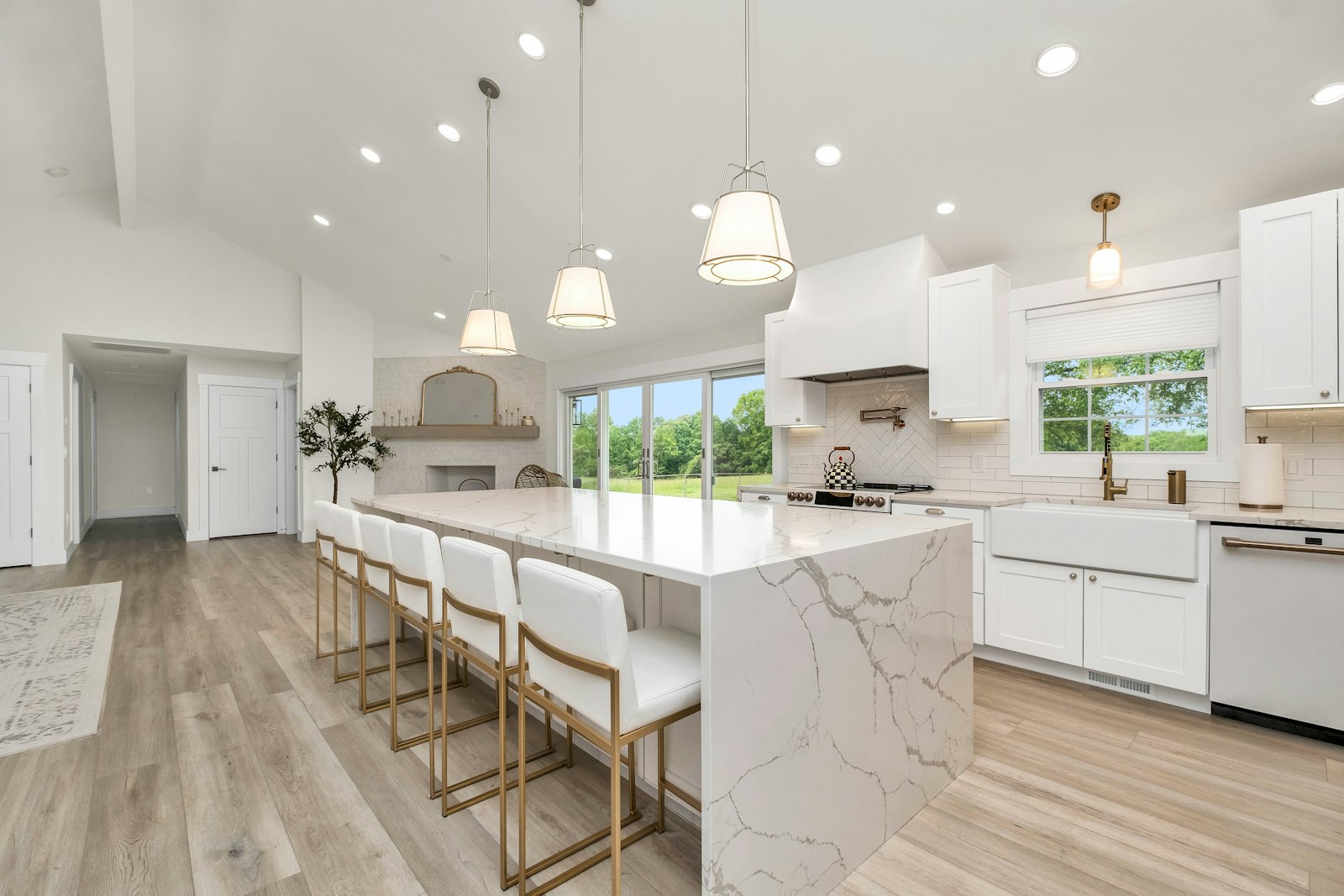
A lot of Kansas City homes still rely on one ceiling fixture per room. The result is bright spots in the middle, dark corners, and a space that never feels as big as it is. Recessed lighting installation in Kansas City fixes that by spreading even light across the whole room without hanging anything from the ceiling.
Here’s what homeowners should know before adding recessed lights, from layout and sizing to the questions that come up when you’re working with an older home.
What Is Recessed Lighting?
Recessed lights, also called can lights or pot lights, sit inside the ceiling so the fixture is nearly flush with the drywall. Instead of one bright source in the center of the room, several recessed lights work together to light the space evenly. As a result, they keep ceilings clean and uncluttered, which makes rooms feel taller and more open.
Where Recessed Lighting Makes the Biggest Difference in Kansas City Homes
Kitchens
Kitchens need plenty of task light. Recessed lights placed over the counters and island put light where you’re cutting, cooking, and cleaning, instead of behind you where your own shadow covers the work. Pair them with under cabinet lighting and the whole kitchen is covered.
Living Rooms and Family Rooms
Builders in older Kansas City neighborhoods often left living rooms with no overhead light at all, just a switched outlet for a lamp. Recessed lights give these rooms real general lighting, and on a dimmer they work just as well for movie night as they do for a busy weekend.
Basements
Finished basements often have low ceilings, which rules out most hanging fixtures. However, slim recessed lights take up almost no headroom and brighten the space so it feels less like a basement.
Hallways, Closets, and Entryways
Small spaces benefit from a couple of well-placed recessed lights. Plus, they’re out of the way, easy to clean, and won’t get bumped by tall furniture or doors.
Planning a Recessed Lighting Installation: How Many Lights Do You Need?
There’s no single answer, but a few common guidelines help with planning:
- Spacing: A common starting point is to divide your ceiling height in half. For example, with an 8-foot ceiling, you would typically space lights about 4 feet apart.
- Distance from walls: Keeping lights roughly 2 to 3 feet from the walls avoids harsh shadows and lights the room more evenly.
- Size: 4-inch lights work well for focused task lighting and smaller rooms. 6-inch lights cover more area and are common in living rooms and kitchens.
- Purpose: General lighting, task lighting, and accent lighting all call for different placement. A kitchen layout looks different from a bedroom layout.
That is why a licensed electrician will plan the layout around your ceiling joists, existing wiring, and how you actually use the room, so you don’t end up with a grid of lights that looks nice on paper but misses the spots that matter.
LED Recessed Lighting Installation vs. Old Can Lights
Older homes often have bulky metal cans with incandescent or halogen bulbs. Those bulbs run hot and burn out often. Meanwhile, according to the U.S. Department of Energy, residential LEDs use at least 75% less energy and last up to 25 times longer than incandescent bulbs. In contrast, modern LED recessed lights are thinner, use far less energy, and can last for years without a bulb change. In addition, many are canless wafer lights that mount directly in the drywall, which makes installation easier in tight ceilings.
If you already have outdated cans, an electrician can often retrofit them with LED trims instead of replacing everything.
Pick the Right Color Temperature
Lighting makers measure color temperature in Kelvin (K). Lower numbers look warm and yellow, while higher numbers look cool and blue. For most homes:
- 2700K to 3000K feels warm and cozy, which works well in living rooms and bedrooms.
- 3500K to 4000K is a clean, neutral white that works well in kitchens, bathrooms, and laundry rooms.
- 5000K is bright and cool, best for garages and workspaces.
Some LED recessed lights have a switch on the fixture that lets you choose the color temperature during installation, so you can match the rest of the house.
Add Dimmers and Smart Controls
Recessed lights are at their best on a dimmer. You get full brightness when you need it and softer light when you don’t. However, choose a dimmer rated for LED fixtures, or you may see flickering or buzzing. Also, smart dimmers let you control lights from your phone or set schedules, which is a nice upgrade while the walls are already open.
Recessed Lighting Installation in Existing Kansas City Homes
Yes. You don’t need to be remodeling to add recessed lighting. In most cases, experienced electricians can run new wiring through existing ceilings with small access holes, keeping drywall repair to a minimum. In older homes, an electrician will also check whether the circuit can handle the added lights and whether any outdated wiring needs an update first.
Insulated ceilings, like a top floor under the attic, need IC-rated fixtures that are safe in direct contact with insulation. This is one of many reasons recessed lighting is a job for a licensed electrician, not a weekend DIY project.
Recessed Lighting Installation in Kansas City
FOM Electric helps homeowners across the Kansas City area plan and install recessed lighting that looks clean and lights the room the right way. From kitchens and living rooms to basements and hallways, we handle the layout, wiring, fixtures, and dimmers. Learn more about our recessed lighting installation services and other light fixture installation options.
Ready to brighten up your home? Contact FOM Electric or call (816) 739-0333 to schedule service.
No responses yet